The “lungs” of beech trees
While walking in a beech forest, you might have the impression to be in a Gothic cathedral, since the place is shady and wet. In spring, the thin, furry, and bright green leaves of beech trees gradually become thicker and dark green, and the impenetrable foliage of the tree crowns holds most of the sunlight, almost completely blocking out the sun rays. In this shady environment, the underbrush is considerably limited and many vegetal species do not survive, except sciophilous plants such as the Common Yew and the Holly, which do not need direct sunlight.
In early spring, the young leaves of beech trees are still very vulnerable and sometimes the plant may miscalculate the time of the growing season. When it happens, a snowfall or late frost have serious consequences on the photosynthetic apparatus. According to some studies, the Beech Tree can efficaciously react to these damages by using sugar and nutrient reserves to start a second foliation, replacing the leaves “burned” by frost.
In beech forests, tree crowns must also confront other threats. An exclusive parasite of the Beech Tree is always lurking: the small Beech Gall Midge (Mikiola fagi) is a dipteran which lays its eggs in buds. After hatching out, the larva penetrates in the leaf veins and causes the formation of a gall – a small, spherical ligneous malformation we often see on the leaves as a result of an attack by fungi, insects, or other organisms. These hollow tumoral formations protect the larva until it undergoes complete metamorphosis and becomes adult. But one of the worst enemies of the tree crown is the tiny Beech Leaf-miner Beetle (Rhynchaenus fagi): the adults feed on young leaves, piercing them and laying their eggs. There are times when this insect infestation can destroy most of the foliage.
In summer, the sunlight filters through the high and leafy branches, producing a beautiful play of lights and shadows. The tree crown plays a very important role in chemical processes. In fact, through one of the most important biological processes of the planet – the photosynthesis – plants release oxygen, produce organic compounds, and pull in carbon dioxide.
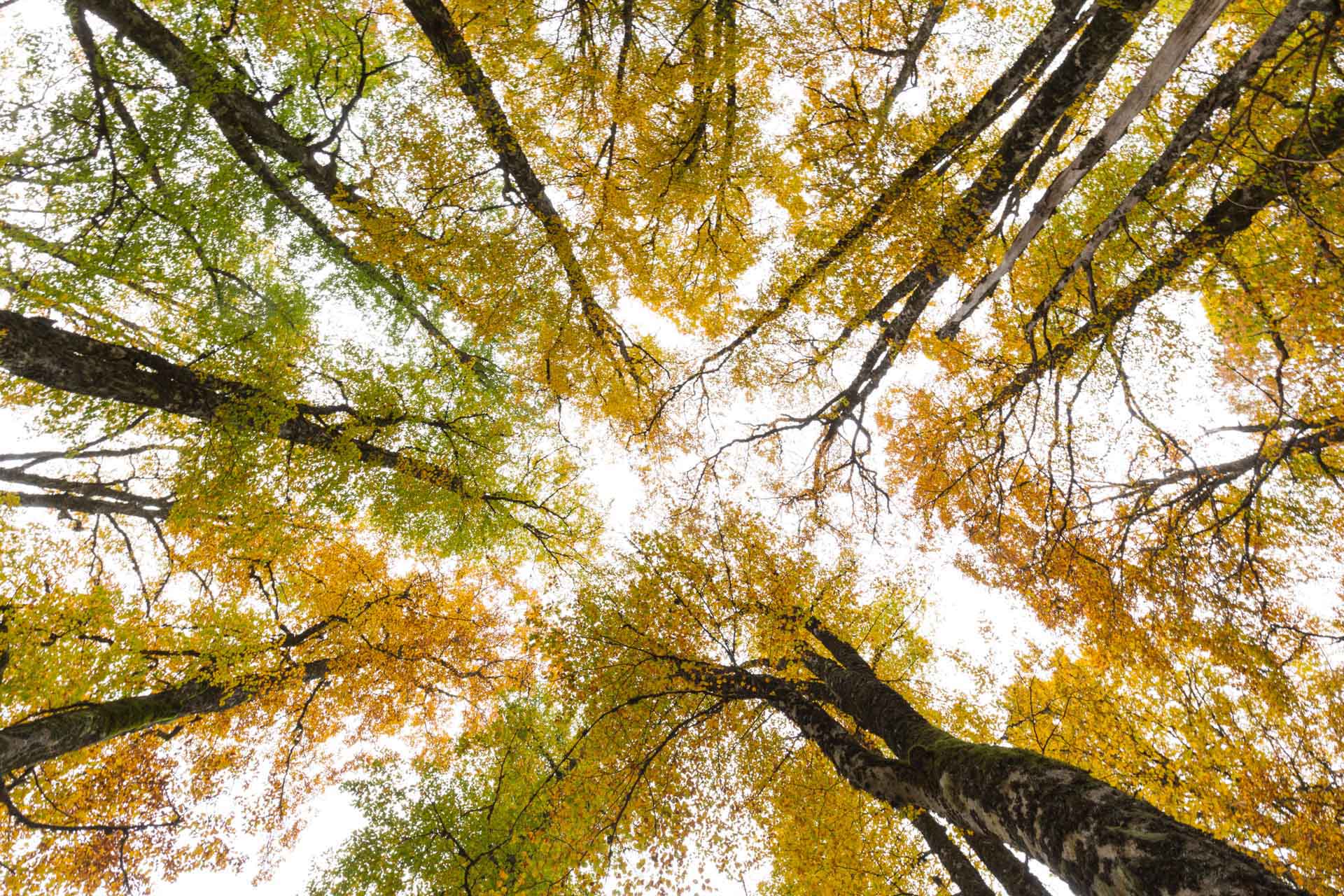
With the arrival of autumn, the beech forest becomes a multi color palette. Tree crowns are filled with lively colors: the green of the leaves gives way to red, yellow, and orange. This happens when it starts getting cold and the days become shorter and shorter: plants are stimulated to store inside their trunk chlorophyll – no longer needed for the photosynthesis – and to leave in the leaves only sugars and carotenoids, that is the plant pigments responsible for the lively colors. Beech forests are famous for their multicolored autumn foliage falling to the ground and forming a wonderful and picturesque carpet in contrast to the green mosses and gray lichens.
Season after season, the large tree crowns with their colors going from green to red and orange give beech trees their own specific character and identity.
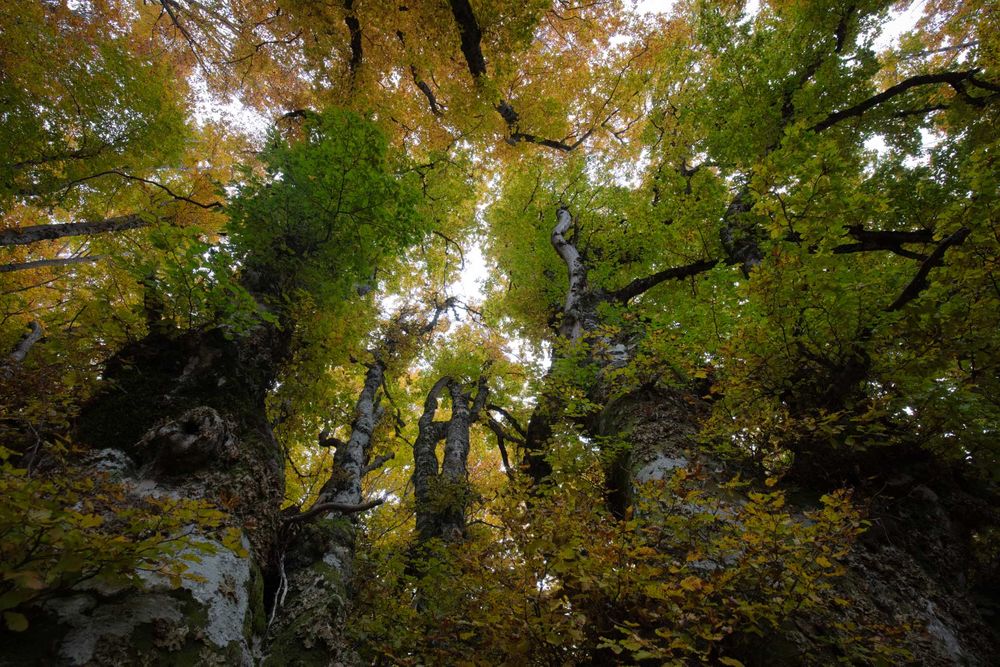
Early autumn in the beech forest - Photo by Francesco Lemma 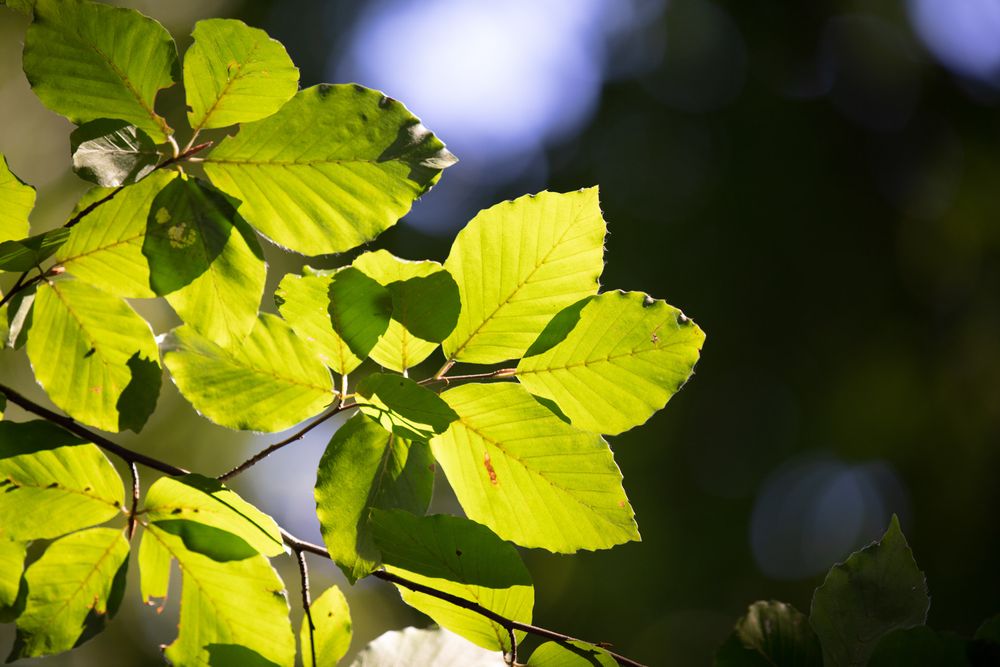
Beech tree leaves: note the trichomes, or small plant "hairs", on the edge of the leaf - Photo by Francesco Lemma 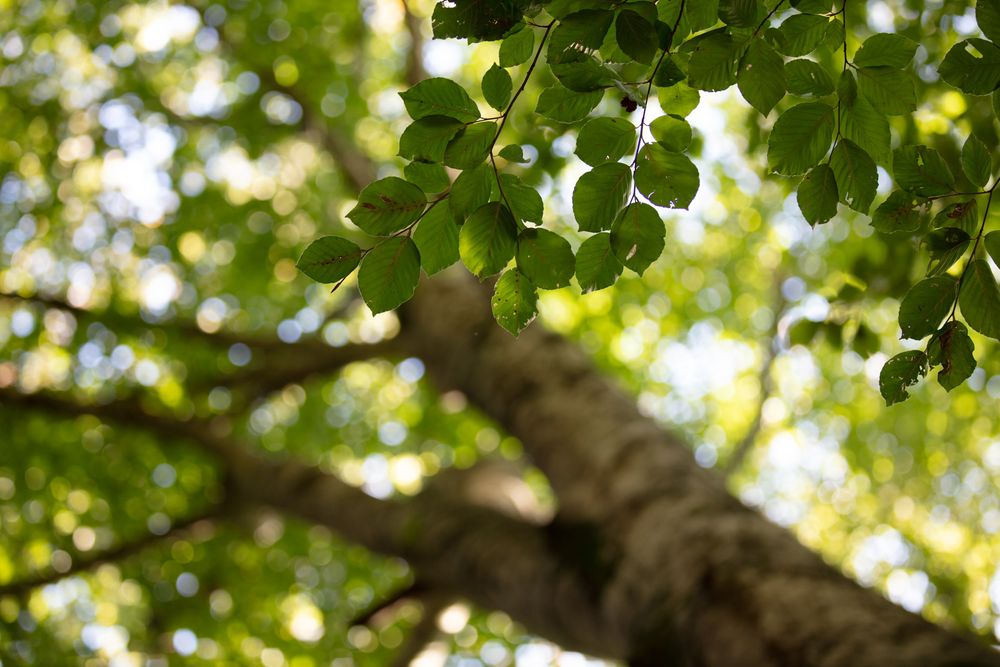
Green beech tree leaves - Photo by Francesco Lemma 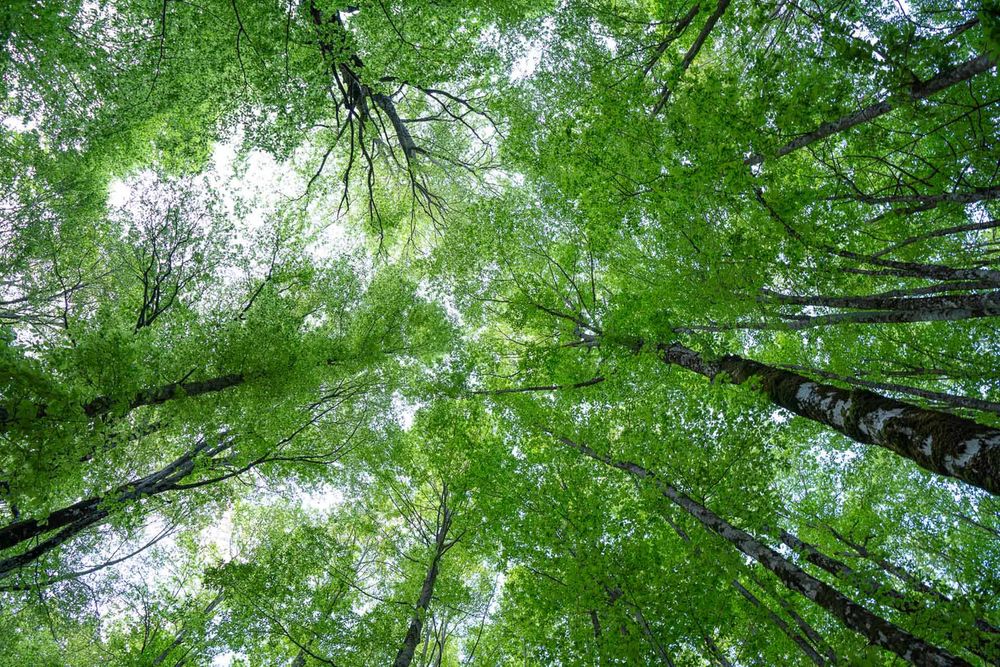
Spring tree canopy in the forest - Photo by Valentino Mastella